
You know what happened. But how do you know what's going to happen next?
With Digital Twin Intelligence, we transform data, systems and processes into a digital model of your business. We support your teams in exploring scenarios and assessing the potential impacts on sales, resources and customer experience. A shared vision to guide investments, coordinate actions, and decide how to grow.
Engagement
Advisory + Build
Outcome
Clear scenarios, conscious choices
Scope
4-10 weeks
Advanced predictive analytics
Business is evolving. With the Digital Twin, you can anticipate future scenarios and choose how to act.
Inventory, prices, demand, and customer behaviors change every day. The Digital Twin connects data, systems and processes in a digital business model to interpret these dynamics in an integrated manner, simulate scenarios, and evaluate the impact of decisions on sales, operations and customer experience.
More informed decisions
An integrated view of your business processes helps you understand what's happening, compare alternatives and identify where you need to take action to achieve your goals.
Scenarios to explore
Simulate business and operational decisions in the digital model, evaluating their impact on costs, resources and service before applying them to real business.
Data that guides choices
Commerce, CRM, production, and logistics data become a shared foundation for understanding process relationships and guiding decisions along the entire value chain.
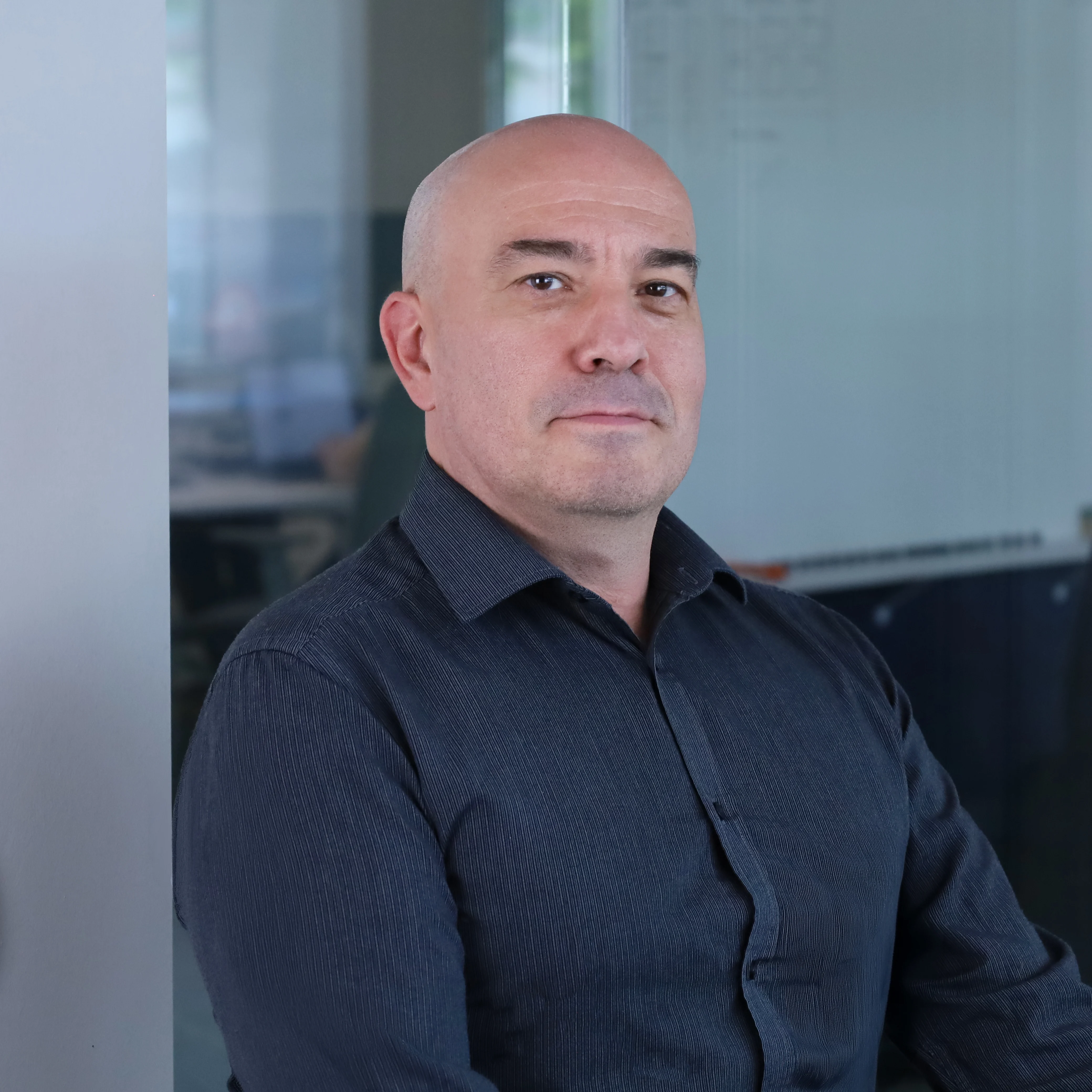
Marco Fabbri
Chief Technology Officer
Seen up close
"The value of Digital Twin lies in helping people make decisions every day. It means giving them a clearer vision, the ability to explore alternatives and a common basis on which to discuss and make decisions together with greater confidence."
The Solution
A model of your business to explore possibilities and choose how to grow.
Digital Twin connects data, processes and systems into a digital model that helps people understand the business and evaluate their decisions. Marketing, sales and operations share a vision of activities, explore scenarios and analyze the potential impacts on revenue, resources and customer experience.
Shared goals and processes
It represents processes based on business objectives, connecting activities, people and responsibilities. It provides teams with a common foundation for understanding how each phase contributes to results.
A reading of the activities
Use operational data to show how processes actually work. Help people recognize business dynamics and identify opportunities for improvement.
Information that unites teams
It connects e-commerce, CRM, ERP, PIM, marketing and logistics platforms. It makes information useful to various business functions, facilitating comparison and coordination of decisions.
The value of every choice
It helps understand how a promotion, change in demand or assortment choice affects sales, product availability and customer service.
Scenarios to decide
It allows teams to explore business and operational alternatives, comparing their potential impacts on revenue, costs and resources. It provides concrete evidence for decision-making.
An evolving model
It updates alongside company data, processes and priorities. It supports people in exploring new opportunities and makes decisions at various stages of growth.

What's happening in your company
Explore scenarios. Empower decisions. Build growth.
01
Signals read in advance
Changes in inventory, content, traffic or customer behavior become visible before they impact conversions and orders.
02
Comparable scenarios
Compare multiple business hypotheses on the same model so that a decision is evaluated against alternatives and not in isolation.
03
More solid decisions
Choices about catalog, pricing, campaigns or releases are based on a shared reading of the data, reducing the margin of error.
04
Awareness in testing
Before any action, you can evaluate the expected effect on the related processes, avoiding surprises on the customer journey.
05
Growth by verified increments
A model that starts from a specific area and extends to other areas of the business only when it proves to improve decisions.
Process
From your goals to more informed decisions, in four steps.
We start with your business priorities and work with the people who drive results. The model grows progressively based on verified value and business objectives.
Step 1: 1-2 weeks
Discovery
We analyze the business demand and the systems involved to understand which data and processes are truly needed to answer that demand.
Step 2: 1-2 weeks
Twin Blueprint
We translate objectives into a Digital Twin project. We define the data to be connected, the relationships between processes and the scenarios to be explored, to help marketing, sales and operations understand the impact of their decisions.
Step 3: 3-6 weeks
Incremental Build
We develop the model incrementally, connecting company data and verifying its usefulness with the teams. Each phase makes the business analysis more concrete and offers new insights for comparing alternatives and guiding decisions.
Step 4: 1-2 weeks
Go Live
We support people in using the Digital Twin to support decision-making. We extend the model to new scenarios and business functions, following business priorities and leveraging the results verified with the teams.
What sets us apart from others
The difference is in the way activities are organized around the business.
Our approach connects architecture, data, and processes to prevent growth from generating new fragmentation: we transform operational complexity into strategic clarity, aligning decisions and priorities with business outcomes.
The standard approach
- Systems, marketing and AI proceed in silos with separate logic and priorities.
- Existing solutions are adapted to contexts with different constraints.
- Intervention is initiated only after the problem has emerged and costs have already increased.
- Technology, growth and relationships are distributed across different vendors.
- The project is measured by distinct outputs, not by system convergence.
The Redify Model
- We integrate systems, marketing and AI toward a single business direction.
- We start from the points of friction to build what's really needed.
- We design architectures and paths based on the client's constraints, stack and objectives.
- A single method to make technology, growth and relationships work together.
- We protect what matters: control, speed, direction and growth capacity.
Designed For Your Role
Same model. Different decisions.
Digital Twin helps those who lead technology, digital channels, marketing and AI connect their decisions to business objectives. A shared model allows each team to explore scenarios, understand impacts and coordinate actions according to their priorities.
CTO
Evaluate how technology choices can impact business processes and results. The Digital Twin helps you explore the effects of integrations and releases, understand system dependencies and direct investments toward business priorities.
Head of Digital
Connect the evolution of digital channels to customer needs and business objectives. The Digital Twin helps you compare scenarios, coordinate people and platforms and define development priorities based on the potential impact on customer experience and operations.
CMO
Explore how campaigns, content and promotions can contribute to business growth. The Digital Twin connects marketing, sales and customer journey data to help you evaluate scenarios, direct budgets, and understand the potential impact on conversions and customer value.
CDO & AI Expert
Transform corporate information assets into a shared basis for decisions. The Digital Twin connects data and processes, providing a framework for exploring patterns, evaluating scenarios and integrating AI to support people, with results that can be verified against business objectives.
Related Insights

How to choose the best SEO agency for fashion and luxury

Giuliano Torelli
Chief Marketing Officer

The perfect platform does not exist: how to choose the right tech stack for your business

Marco Fabbri
Chief Technology Officer

Headless, Composable o MACH? How to choose the right ecommerce architecture in B2B manufacturing
Marco Fabbri
Chief Technology Officer

Features vs Revenue: why adding features doesn't automatically increase sales

Andrea Ciliberti
Senior Business Consultant

SEO vs GEO: il punto di vista di un growth marketing manager

Marta Spiga
Senior Growth Marketing Lead

Composable Commerce for Retail: when to adopt it and when it's just Overengineering.
Marco Fabbri
Chief Technology Officer

Global Luxury Commerce: business-driven international expansion
Giuliano Torelli
Chief Marketing Officer

Marketing Orchestration: from generic campaigns to personalized journeys
Giuliano Torelli
Chief Marketing Officer

Turn every decision into a business advantage.
With Digital Twin, you connect data, processes and systems to predict the impact of your decisions on revenue, margins, operations and customer experience.


Turn every decision into a business advantage.
With Digital Twin, you connect data, processes, and systems to predict the impact of your decisions on revenue, margins, operations and customer experience.