
Take your business where you want to go. Give digital the structure to follow you.
We design the connection between e-commerce, ERP, PIM, CRM, marketing, data and AI in an architecture driven by your goals. We support your people to coordinate activities, create consistent shopping experiences, and develop new sales opportunities. Every technological choice contributes to making the entire ecosystem more manageable, scalable and ready to evolve.
Outcome
Integrated and scalable commerce ecosystem
Engagement
Strategic consulting and implementation
Scope
6–14 weeks
When to intervene
Commerce is changing. Can your architecture keep up?
New markets, channels and sales models impact catalogs, pricing, orders and business systems. We help you understand which parts of the ecosystem can support the change, which need to be rethought and how to organize the interventions.
Markets
We evaluate how to manage catalogs, languages, price lists and integrations to support commercial expansion, taking into account the differences between markets.
Channels
We design connections between e-commerce, marketplaces and stores, defining how to share product information, availability and orders.
Processes
We map the connections between systems and teams to identify manual activities, duplication and unclear responsibilities. From there, we define integration priorities.
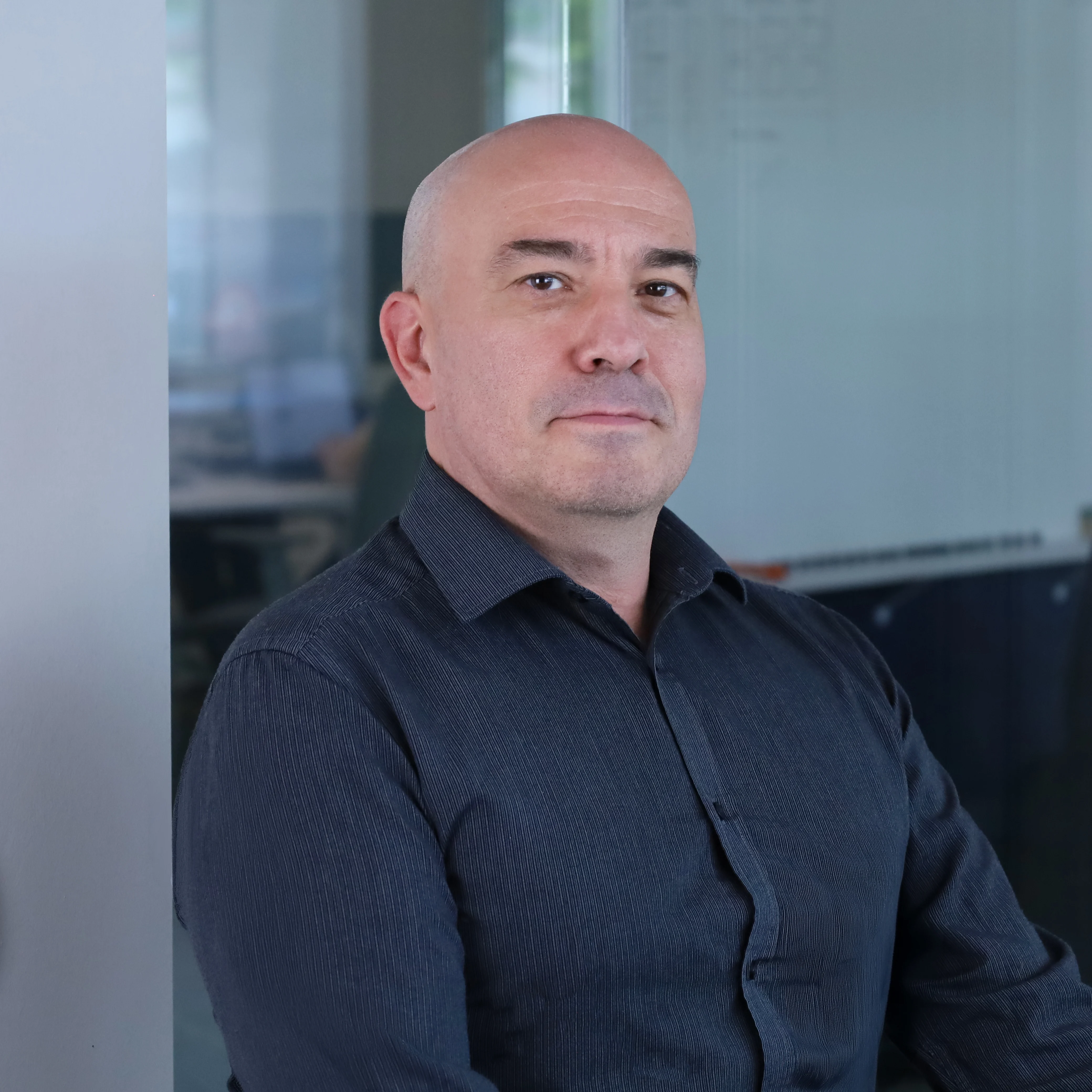
Marco Fabbri
Chief Technology Officer
Seen up close
«Before choosing a platform, we need to understand how the company wants to sell, which systems need to work together, and who will manage them. The architecture helps make these choices consistent and organize the interventions.»
What we plan
A commerce architecture, from systems to the shopping experience.
We define the role of the applications, the data to be exchanged and management responsibilities. We integrate systems and digital experiences, involving AI expertise when a relevant use case exists. We evaluate whether to maintain, extend or replace existing components: the composable approach is an option but not a mandatory starting point.
Catalog and product information
We define where technical data, descriptions, images, and commercial attributes are managed and how they are distributed between ERP, PIM, commerce platform and sales channels.
Content and brand experience
We design the relationship between CMS, commerce platforms and digital interfaces, clarifying how content and components are published across different markets and channels.
Purchase paths and interfaces
We design connections between the shopping experience and commerce functions: search, product pages, account, cart and checkout. We evaluate the separation between frontend and backend when it meets the project's needs.
Integrations and data flows
We define exchanges between applications, update rules, and error handling. Products, availability, customers and orders have explicit sources and responsibilities, with flows designed to be monitored.
Prices, commercial conditions and orders
We design how to manage price lists, promotions, customer terms and conditions, and the order cycle between the commerce platform and company systems, taking into account the expected B2B and B2C sales models.
AI and automation, when needed
We evaluate commerce-related use cases, such as catalog browsing, team support, and content management. Before integration, we define accessible data, controls, responsibilities, and verification criteria.

What's happening in your company
Your architecture takes value from the results of your people.
01
Opportunities
An ecosystem designed to develop markets, channels, and sales models.
02
Continuity
An evolution that accompanies the activities of the company and its people.
03
Clearly
Understand the interrelationships between investments, priorities and expected outcomes to guide decisions.
04
Ideas
Translate business needs and team insights into features, services and experiences.
05
Growth
A technological foundation capable of meeting new volumes, needs and opportunities.
Process
Four phases. A clear vision. A path built together.
We share objectives, responsibilities, and evaluation criteria from the beginning. We proceed through concrete steps, so your people can follow the decisions, contribute to implementation and prepare for day-to-day management.
Step 1: 1-2 weeks
Listening and priorities
We start by talking to those who run the business and those who use the systems every day. We gather needs, observe workflows and identify the most relevant interventions.
Step 2: 2-3 weeks
Design
We translate priorities into an architecture project. We define the role of applications, the connections between data and the sequence of interventions, with a shared roadmap.
Step 3: 3-6 weeks
Realization and verification
We develop the planned connections and features, involving the teams in the testing. Each progress report allows us to evaluate the work against real-world usage.
Step 4: 2-3 weeks
Go Live
We support the launch with support, documentation and training. People become familiar with the new structure and the tools to guide their next steps.
What sets us apart from others
The difference is in the way activities are organized around the business.
Our approach connects architecture, data, and processes to prevent growth from generating new fragmentation: we transform operational complexity into strategic clarity, aligning decisions and priorities with business outcomes.
The standard approach
- Systems, marketing and AI proceed in silos with separate logic and priorities.
- Existing solutions are adapted to contexts with different constraints.
- Intervention is initiated only after the problem has emerged and costs have already increased.
- Technology, growth and relationships are distributed across different vendors.
- The project is measured by distinct outputs, not by system convergence.
The Redify Model
- We integrate systems, marketing and AI toward a single business direction.
- We start from the points of friction to build what's really needed.
- We design architectures and paths based on the client's constraints, stack and objectives.
- A single method to make technology, growth and relationships work together.
- We protect what matters: control, speed, direction and growth capacity.
Designed For Your Role
Different responsibilities but with the need to move forward together.
Those who define strategy, those who manage technology and those who manage customers and sales all view digital from different perspectives. We provide these perspectives with common ground by connecting each person's decisions to the company's objectives.
CTO
A clear understanding of applications, connections and dependencies. To evaluate interventions, guide investments and support technological evolution with a comprehensive view.
Head of Digital
An operational base for developing the digital channel, coordinating activities and improving purchasing paths. To pursue sales priorities and make the teams' contributions concrete.
CMO
A clear connection between digital choices, customer relations and business development, directing resources and initiatives toward growth, quality of experience and focus on margins.
CDO e AI Expert
Organized data, traceable flows and shared usage criteria. To build reliable analytics and AI applications that meet the real needs of people and processes.
Related Insights

Headless, Composable o MACH? How to choose the right ecommerce architecture in B2B manufacturing
Marco Fabbri
Chief Technology Officer

Composable Commerce for Retail: when to adopt it and when it's just Overengineering.
Marco Fabbri
Chief Technology Officer

SEO vs GEO: il punto di vista di un growth marketing manager

Marta Spiga
Senior Growth Marketing Lead

The perfect platform does not exist: how to choose the right tech stack for your business
Marco Fabbri
Chief Technology Officer

How to choose the best SEO agency for fashion and luxury

Giuliano Torelli
Chief Marketing Officer

Beyond Traffic: why more visitors doesn't mean more profit
Giuliano Torelli
Chief Marketing Officer

Global Luxury Commerce: business-driven international expansion
Giuliano Torelli
Chief Marketing Officer

Features vs Revenue: why adding features doesn't automatically increase sales

Andrea Ciliberti
Senior Business Consultant


What ambition do you want to make possible?
Tell us where you want to go, and together we'll explore the connections between people, processes and technologies that can help you achieve your goals.